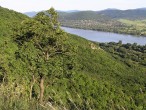
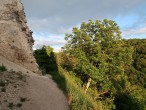
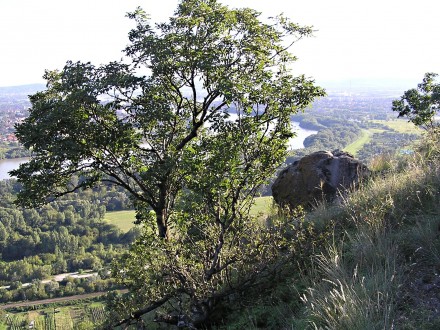
Species: Fraxinus ornus L., Genus: Fraxinus, Family: Oleaceae, Group: Angiosperms

(Fraxinus ornus L.)
-> Genus: Fraxinus -> Family: Oleaceae -> Group: Angiosperms

Habitus

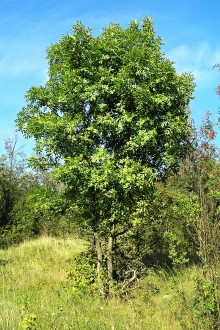
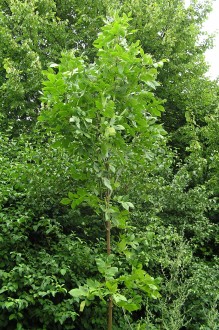
  • it is a tree 8 -15 m high, but often only as a shrub
  • crown is broadly ovate to spherical
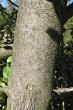
  • bark is smooth, light grey, later dark grey, in older age only slightly shallowly fissured bark

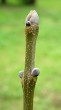
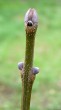
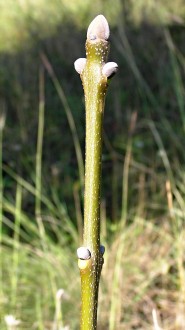
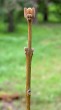
Buds

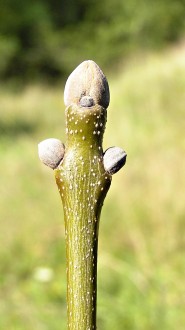
  • buds are arranged crosswise opposite
  • bud pairs are directly to obliquely opposite
  • covering scales are grey to brownish, tomentose !
  • it is morphologically similar to Fraxinus excelsior

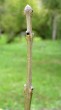
Shoots

  • shoots are olive green to brownish grey-green
  • shoots are round in cross section, often quadrangular
  • lenticels are prominent, brown

Leaves (assimilation organs)

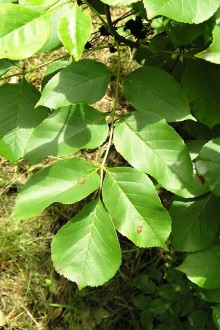
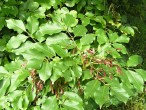
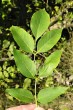
  • the leaves are compound - oddly pinnately compound, 20 - 30 cm long
  • they are composed of 3 - 4 pairs of individual leaves
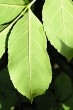
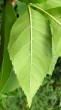
  • individual leaves are elliptical, ovate to oblong-ovate, the margin is serrate
  • the upper side is darker
  • the lower side is lighter, on the midrib and in the vein axils first white, later rusty tomentose

Flowers

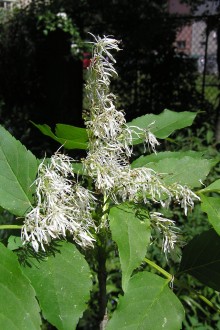
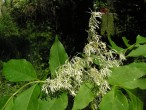
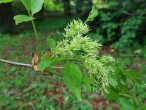
  • the tree is monoecious, the flowers are mostly bisexual, yellow-white, grouped in abundant terminal panicles, strongly fragrant
  • it is flowering in IV – V, simultaneously with the development of the leaves

Fruits – seeds

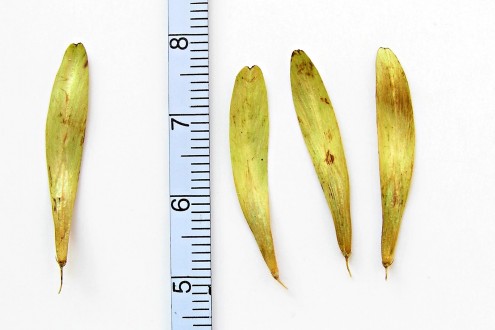
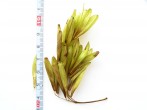
  • the fruit is a winged achene, 30 - 40 x 5 - 8 mm large, linguoid to lanceolate
  • the wing is widest in the upper third
  • it ripens in August

Extension

  • it was originally widespread in southern Europe (from Spain through the Balkans to Asia Minor)
  • it has the northern limit of its distribution in southern Slovakia
  • on warm sunny slopes and in forest-steppes, such as Devínska Kobyla and Kováčovské hills, it forms communities with downy oak (Quercus pubescens)

Ecology

  • it is a light-loving woody plant resistant to drought and high temperatures
  • it grows mainly on limestone
  • it often freezes when grown in colder areas

Significance

  • for greening extremely dry limestone habitats
  • it is also suitable for urban plantings (decorative when in bloom)
  • it is protected by law
Support atlasdrevin.sk

Súbory cookies:

S cieľom zabezpečiť riadne fungovanie tejto webovej lokality ukladáme niekedy na vašom zariadení malé dátové súbory, tzv. cookie.
Ak povolíte všetky cookies a navštívite nás nabudúce, pripojíte sa vďaka ním rýchlejšie, a náš web vám ponúkne relevantné informácie a umožní vám počas objednávky jednoduchšie vyplniť vaše údaje. Súbory cookies používame najmä na anonymnú analýzu návštevnosti a vylepšovania našich stránok. Ak sa rozhodnete neakceptovať cookies, nebudete môcť používať niektoré funkcie na našej webovej stránke.

Akceptovať všetky cookies