Olea europaea L.

(Olea europaea L.)
-> Genus: Olea -> Family: Oleaceae -> Group: Angiosperms

Habitus

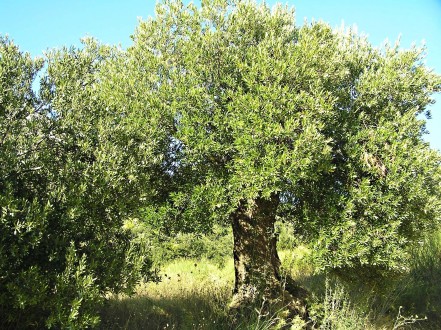
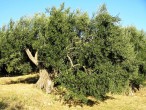
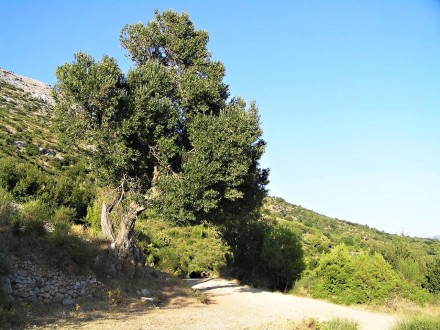
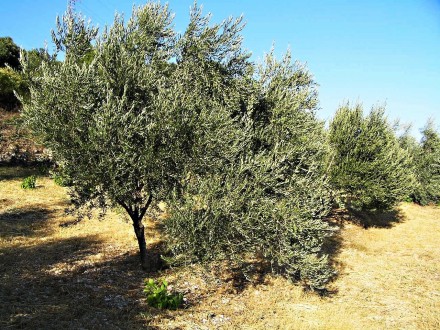
  • evergreen tree, sometimes as a shrub, up to 10 m high
  • crown is irregular, ovoid to spherical, densely branched
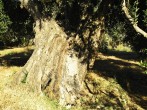
  • trunk is short and twisted in old individuals
  • bark is greyish, cracked

Leaves (assimilation organs)

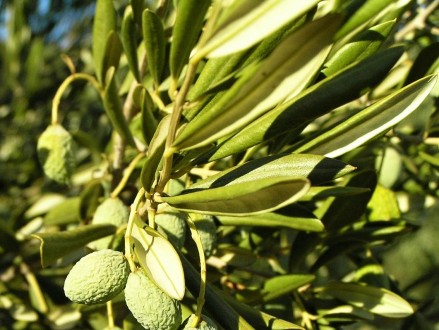
  • leaves are simple, entire, lanceolate to oblong-elliptic, leathery, white tomentose on the underside, non-deciduous, 4 - 10 x 1 - 3 cm large

Fruits – seeds

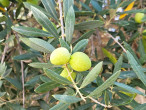
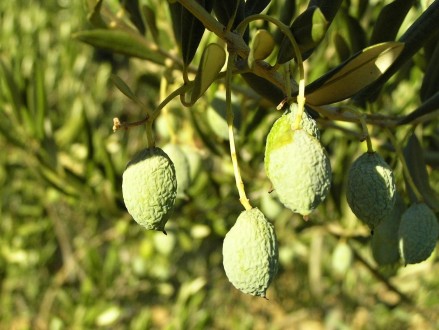
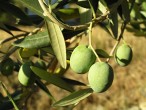
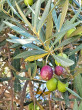
  • the fruit is an ovate to elliptical drupe 1.0 - 2.5 cm large
  • it is green before ripening, dark blue to black after ripening
  • it contains one seed

Extension

  • it is an old cultivated tree cultivated in the areas around the Mediterranean Sea • original olive trees grow in dry oak forests
  • presumed origin is in southwest Asia (Iran ?)

Ecology

  • it is a thermophilic, light-loving and drought-resistant woody plant
  • itgrows mainly on dry and often very rocky soils

Significance

  • it is a fruit-bearing woody plant
  • olive oil is pressed from olive fruits, which is used both in the food industry and in the pharmaceutical industry
  • the wood is hard, high-quality with a beautiful pattern, also suitable for furniture production
  • olive is one of the long-lived woody plants - there are individuals whose age is estimated at 1000 - 2000 years
Support atlasdrevin.sk

Súbory cookies:

S cieľom zabezpečiť riadne fungovanie tejto webovej lokality ukladáme niekedy na vašom zariadení malé dátové súbory, tzv. cookie.
Ak povolíte všetky cookies a navštívite nás nabudúce, pripojíte sa vďaka ním rýchlejšie, a náš web vám ponúkne relevantné informácie a umožní vám počas objednávky jednoduchšie vyplniť vaše údaje. Súbory cookies používame najmä na anonymnú analýzu návštevnosti a vylepšovania našich stránok. Ak sa rozhodnete neakceptovať cookies, nebudete môcť používať niektoré funkcie na našej webovej stránke.

Akceptovať všetky cookies