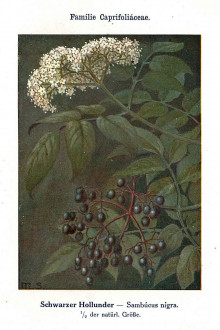
Sambucus nigra L.

(Sambucus nigra L.)
-> Genus: Sambucus -> Family: Caprifoliaceae -> Group: Angiosperms

Habitus

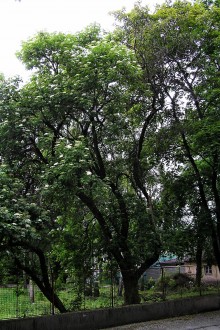
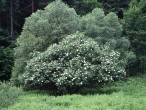
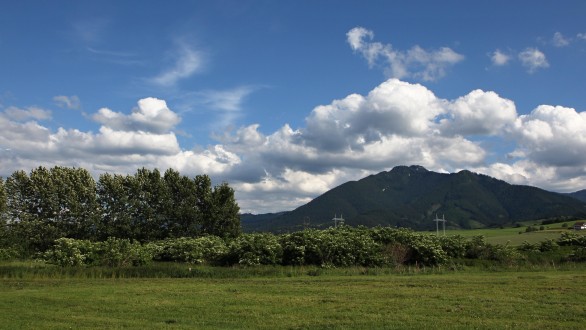
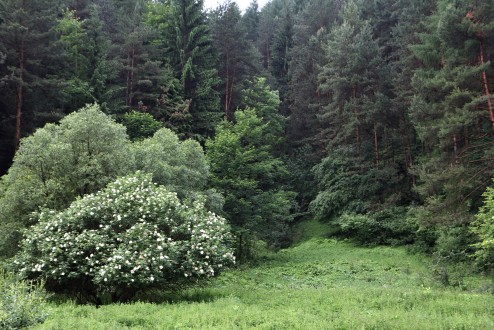
  • most often as a shrub, rarely a tree 8 - 10 m high
  • crown is dense irregular
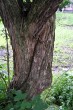
  • bark is yellow-grey to light brown
  • bork is relatively deeply fissured into longitudinal strips, greyish to brownish-grey

Buds

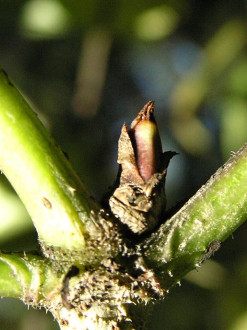
  • buds are opposite, 7-10 x 4-5 mm in size, cylindrical, pointed, semi-naked, only at the base covered with greenish to reddish-brown integumentary scales, between which green leaves protrude

Shoots

  • shoots are straight, relatively thick with many convex lenticels
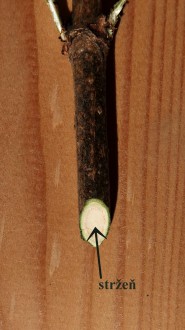
  • the stem is large, white

Leaves (assimilation organs)

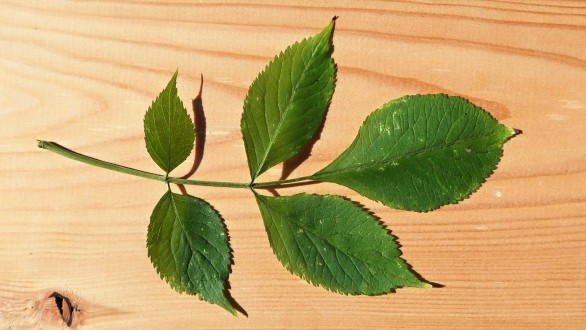
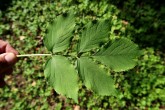
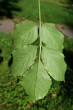
  • the leaves are compound -  oddly pinnately composed of 2 - 3 pairs of individual leaves, 20 - 25 cm long
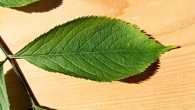
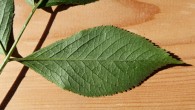
  • individual leaves are ovate to elongated round with a longer tip, 6 - 12 x 4 - 6 cm large, at the base they are entire marginal, only in the upper part irregularly coarsely serrate
  • the upper side of the leaves is darker green, the lower side is lighter and sparsely hairy on the veins

Flowers

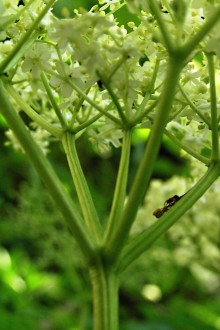
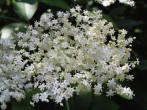
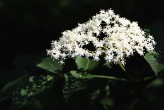
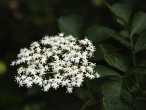
  • the tree is monoecious, the flowers are bisexual, white, grouped into flat 10 - 20 cm wide five-armed terminal spikes
  • the flowers are strongly aromatic

Fruits – seeds

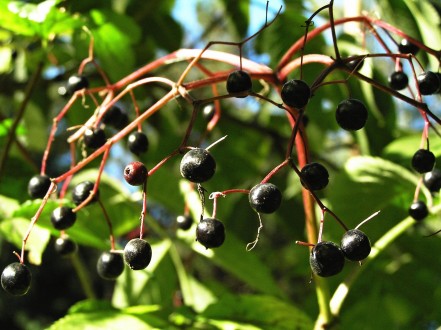
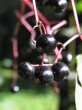
  • the fruit is a spherical drupe, dark purple to black, 4 - 5 mm large
  • it contains two compressed, ovoid seeds, 2 - 4 mm large

Extension

  • originally almost in all of Europe
  • in Slovakia from the lowest altitudes and rises on average to 800 m above the sea level
  • it grows in deciduous forests on soils well supplied with nutrients and sufficiently moist, especially in floodplain forests and riparian stands
  • it is abundant in rubble mounds - wherever there is a higher humus content and where intensive nitrification takes place (an aerobic process in which nitrogenous substances are oxidized by bacteria, part of the transformation of nitrogenous substances in the soil)

Ecology

  • it is partially shaded woody plant, demanding on soil nutrient content and soil moisture

Significance

  • it is a land reclamation tree
  • it is decorative with flowers, but also with leaf forms
  • flowers are used in medicine
  • it is fruit-bearing
  • it stands out for its high regrowth, which can also cause problems
  • pipes and “fujaras” are made from the wood of the trunks

From history

Support atlasdrevin.sk

Súbory cookies:

S cieľom zabezpečiť riadne fungovanie tejto webovej lokality ukladáme niekedy na vašom zariadení malé dátové súbory, tzv. cookie.
Ak povolíte všetky cookies a navštívite nás nabudúce, pripojíte sa vďaka ním rýchlejšie, a náš web vám ponúkne relevantné informácie a umožní vám počas objednávky jednoduchšie vyplniť vaše údaje. Súbory cookies používame najmä na anonymnú analýzu návštevnosti a vylepšovania našich stránok. Ak sa rozhodnete neakceptovať cookies, nebudete môcť používať niektoré funkcie na našej webovej stránke.

Akceptovať všetky cookies