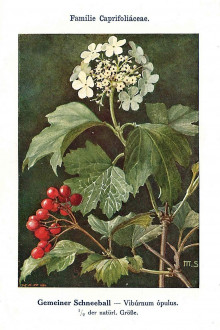
Viburnum opulus L.

(Viburnum opulus L.)
-> Genus: Viburnum -> Family: Caprifoliaceae -> Group: Angiosperms

Habitus

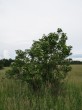
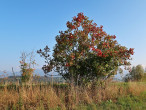
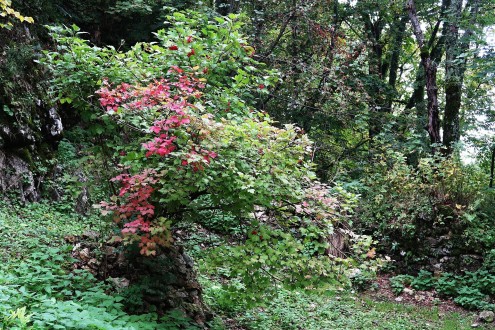
  • it is a shrub 2 - 5 m high
  • crown is irregular, relatively sparsely branched
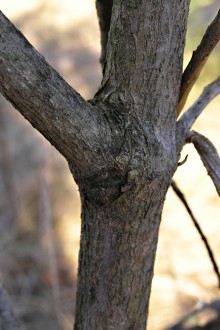
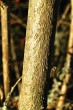
  • bark is yellowish-grey, later dark grey, longitudinally finely reticulately fissured

Buds

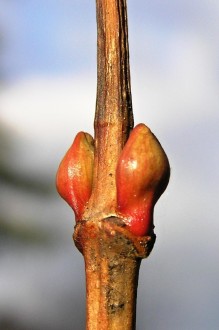
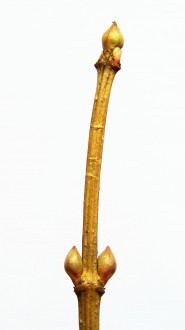
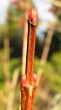
  • buds are arranged directly opposite
  • the buds themselves are ellipsoidal to obovate, pointed, widest in the upper third
  • envelope scales are green to red
  • terminal buds are most often paired !

Shoots

  • shoots are grey-yellow to light brown, often slightly 6-sided
  • lenticels are convex

Leaves (assimilation organs)

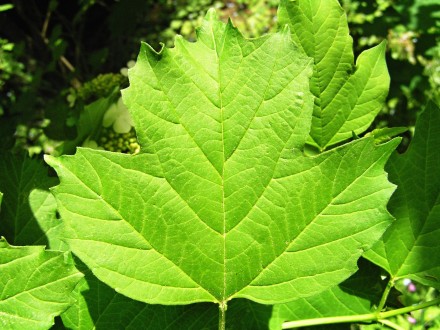
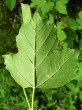
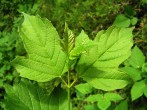
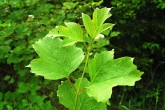
  • the leaves are simple, palmately 3 (5) lobed, broadly ovate to round in outline, opposite, 5 - 10 x 5 - 8 cm in size
  • the lobes are pointed, distantly serrate along the margin
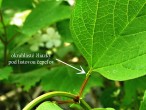
  • the petiole is 2 - 4 cm long with two rows of convex round glands under the leaf blade

Flowers

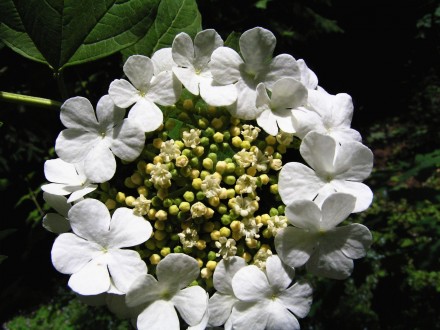
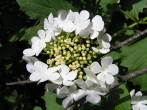
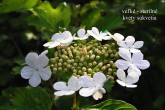
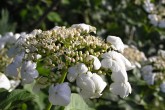
  • the tree is monoecious, the flowers are bisexual, white, grouped into a panicle-like spike at the end of this year's shoots
  • the large, peripheral flowers of the inflorescence are sterile !

Fruits – seeds

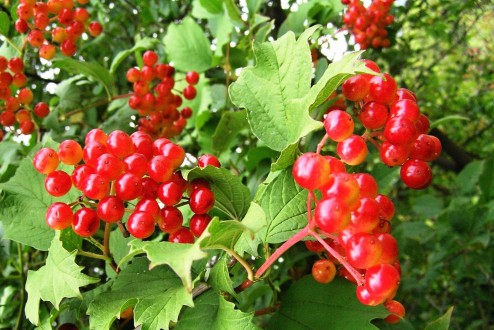
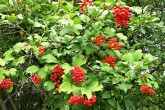
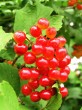
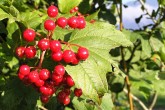
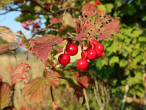
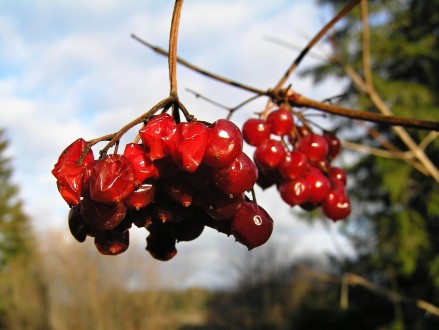
  • the fruit is carmine red when ripe, 8-10 mm large, spherical drupe
  • it ripens in IX - X
  • it contains one compressed 6-9 mm large heart-shaped seed
  • the pulp is bitter, smelly !

Extension

  • originally in almost all of Europe, Asia Minor to North Africa
  • in Slovakia from the lowest elevations to 940 (1,160) m above the sea level
  • it occurs in floodplain forests, moist deciduous forests, coastal thickets

Ecology

  • partially shaded woody plant, frost-resistant, resistant to exhalation

Significance

  • it is ornamental:
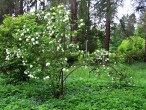
    • with abundant white flowers
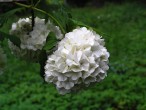
    • often used is the full-flowered sterile form with spherical inflorescences
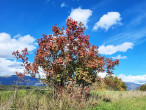
    • in autumn with fruits that persist until winter and leaves that turn red
  • fruitful - the fruits in autumn serve as food for birds
  • overripe fruits tend to "sour" in late autumn, which can also cause "certain difficulties" for hungry singing birds : )

From history

Support atlasdrevin.sk

Súbory cookies:

S cieľom zabezpečiť riadne fungovanie tejto webovej lokality ukladáme niekedy na vašom zariadení malé dátové súbory, tzv. cookie.
Ak povolíte všetky cookies a navštívite nás nabudúce, pripojíte sa vďaka ním rýchlejšie, a náš web vám ponúkne relevantné informácie a umožní vám počas objednávky jednoduchšie vyplniť vaše údaje. Súbory cookies používame najmä na anonymnú analýzu návštevnosti a vylepšovania našich stránok. Ak sa rozhodnete neakceptovať cookies, nebudete môcť používať niektoré funkcie na našej webovej stránke.

Akceptovať všetky cookies