Species: Swida alba (L.) Opiz, Genus: Swida, Family: Cornaceae, Group: Angiosperms

(Swida alba (L.) Opiz)
-> Genus: Swida -> Family: Cornaceae -> Group: Angiosperms

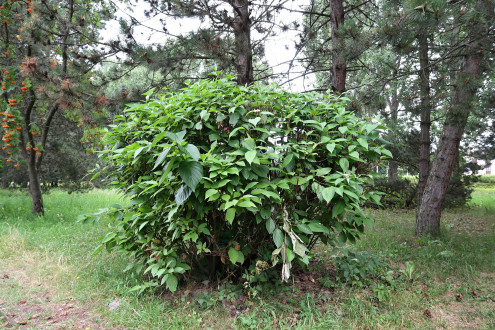
Habitus

  • it is a shrub 2 - 3 m high
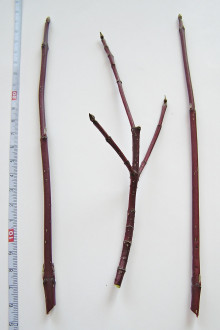
  • branches are straight, thin, flexible, sometimes drooping (they do not root)
  • bark is red to dark red

Buds

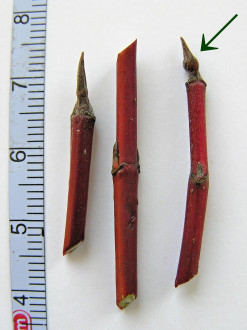
  • buds are opposite (crosswise opposite)
  • buds are glabrous, covered with dense rusty hairs
  • leaf buds are significantly smaller, 2 - 4 x 1 - 4,5 mm large, oblong-ovate, long-pointed, sessile, tightly pressed to the branch
  • flower buds are 5 - 7 x 3 - 4 mm large, broadly ovate, long-pointed, they grow on short stalks (brachyblasts)

Shoots

  • shoots (shoots) are relatively thin, round, red
  • lenticels are sparse, small, whitish

Leaves (assimilation organs)

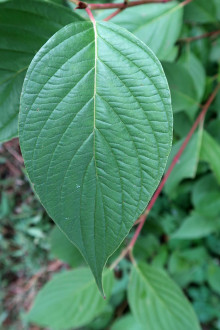
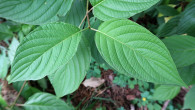
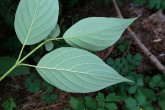
  • leaves are simple, elongated ovate to elliptical, cuneate to rounded at the base, sharply pointed at the end (apex), entire margin
  • upper side is dark green, sparsely hairy
  • lower side is greyish, more densely hairy
  • petiole is 5 - 30 mm long

Flowers

  • it is a tree (shrub) monoecious, flowers are bisexual
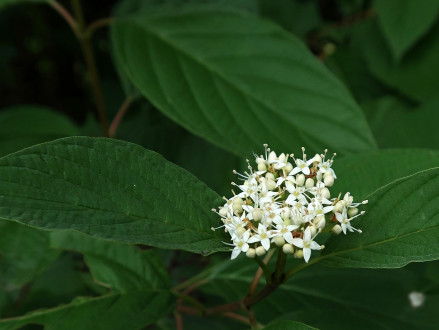
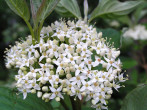
  • flowers are yellowish-white, grouped in dense terminal spikes with a diameter of 3 - 5 cm
  • it flowers in V - VI, often until late summer

Fruits – seeds

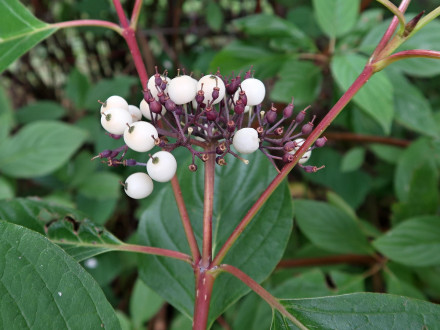
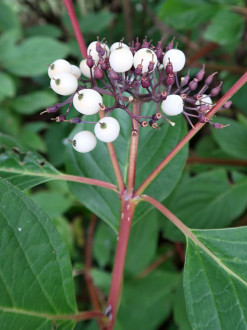
  • the fruit is a 6 - 8 x 5 - 7 mm large spherical drupe, bluish-white to white
  • the stone is ellipsoidal, longitudinally grooved, greyish, hard, 4 - 6 mm long
  • it ripens in VIII - X

Extension

  • it was originally widespread in the northeast of the European part of Russia, it goes through Siberia to the Far East, Mongolia, the north of Korea, China and Japan
  • it grows in river valleys and in floodplain forests
  • in Slovakia it occurs only as a cultivated species
  • it was introduced into culture in 1741

Ecology

  • it is a semi-shade-loving woody plant resistant to frost and high temperatures
  • it is a species of continental climate
  • it is undemanding to the content of nutrients in the soil
  • it does not tolerate extreme drought

Significance

  • it is an ornamental woody plant (shrub) with red branches, leaves that change color in autumn, white flowers and fruits
  • with regard to ecological requirements it is suitable for urban environments
Support atlasdrevin.sk

Súbory cookies:

S cieľom zabezpečiť riadne fungovanie tejto webovej lokality ukladáme niekedy na vašom zariadení malé dátové súbory, tzv. cookie.
Ak povolíte všetky cookies a navštívite nás nabudúce, pripojíte sa vďaka ním rýchlejšie, a náš web vám ponúkne relevantné informácie a umožní vám počas objednávky jednoduchšie vyplniť vaše údaje. Súbory cookies používame najmä na anonymnú analýzu návštevnosti a vylepšovania našich stránok. Ak sa rozhodnete neakceptovať cookies, nebudete môcť používať niektoré funkcie na našej webovej stránke.

Akceptovať všetky cookies