Species: Sorbus domestica L., Genus: Sorbus, Family: Rosaceae, Group: Angiosperms

(Sorbus domestica L.)
-> Genus: Sorbus -> Family: Rosaceae -> Group: Angiosperms

Habitus

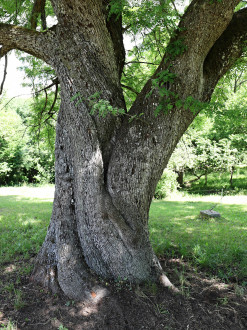
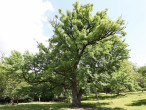
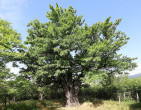
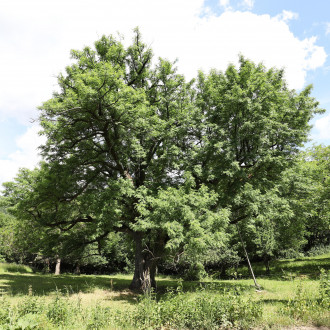
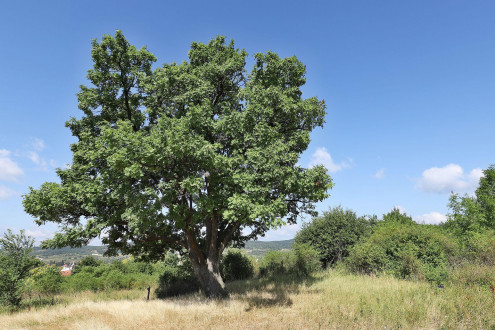
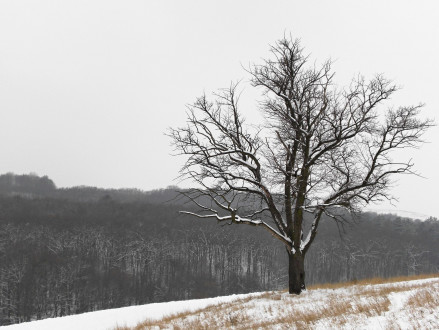
  • it is a tree growing to a height of 15 - 25 (30) m, crown is widely spreading, branches +/- hanging
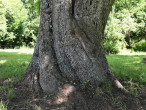
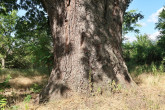
  • the bark is smooth, grey
  • the bork is dark brown, cracked into scaly plates
  • this rowan is the only one that does not interbreed with rowans and does not create hybrids !
  • 40 million years ago it evolved away from other rowans and has been developing independently since then (as a separate species)

Buds

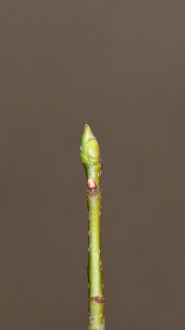
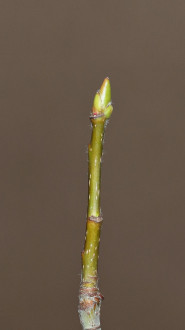
  • buds are spirally arranged, conical, pointed, sessile, the terminal one is the largest
  • there are more integumentary scales, they are brownish red to greenish

Shoots

  • shoots are greyish tomentose, later glabrous, slightly flattened
  • there are numerous ringed brachyblasts

Leaves (assimilation organs)

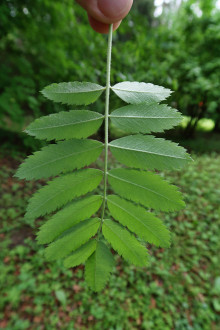
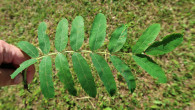
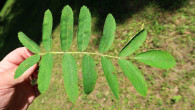
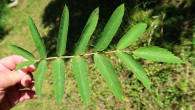
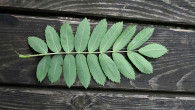
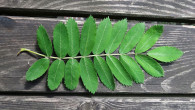
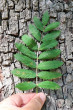
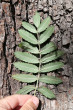
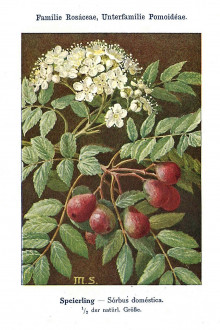
  • leaves are compound - odd-pinnately compound, 15 - 20 (22) cm long
  • they are composed of 6 - 10 pairs of individual leaves
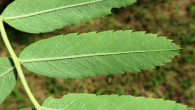
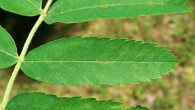
  • individual leaves are oblong-elliptical, 3 - 6 cm long, short-petiolate to sessile, round at the base, serrate along the margin from the lower 1/3 to the apex, shortly acuminate at the apex
  • the upper side is dark green, the lower side is downy when young, later glabrous, grey-green

Flowers

  • the tree is monoecious, the flowers are bisexual, white (felt), grouped into hemispherical racemes with a diameter of about 10 cm
  • it flowers in V – VI

Fruits – seeds

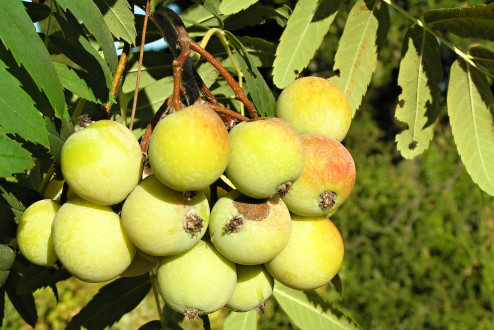
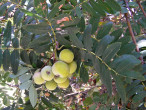
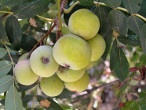
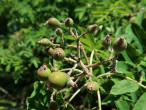
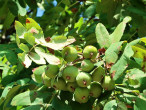
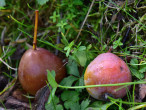
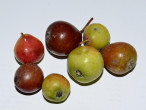
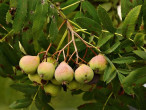
  • the fruit is a spherical to pear-shaped achene, 15 - 30 x 20 mm in size, yellow-red to greenish brown when ripe, sometimes yellow
  • the surface is densely dotted
  • the achenes ripen until they are "rotten" and then acquire a sweet taste

Extension

  • in southern and southeastern Europe
  • in Slovakia it is the northern border of its occurrence within Europe
  • in Slovakia it is widespread in the southern and southeastern parts in the warmest areas, mainly in vineyard areas, where it was grown in the past
  • it is mainly widespread in the first LVS, or it can reach the second, rarely the third LVS
  • in Europe it is widespread mainly in the Mediterranean area - the Apennine, Balkan, Iberian Peninsula, further Crimea, Asia Minor and North Africa
  • Zicháčkova rowan - 369 m a.s.l. , 350 years old, trunk circumference 440 cm, height 20 m (Zabudišová, part Chvílovec)
  • Modranská rowan - according to official measurements it is the largest tree of its kind in the world, trunk diameter 160 cm and trunk circumference 500 cm at a height of 1.3 m from the ground, estimated age from 360 to 500 years

Ecology

  • a heat-loving and light-loving woody plant that requires fertile soil
  • it used to be a border tree planted on land borders and boundaries
  • the rowan thrives mainly in areas where vines are grown

Significance

  • mainly as a fruit-bearing tree
  • the fruits are used in medicine - medieval authors mention cut and dried fruits as a remedy for intestinal diseases and loss of appetite
  • the fermented fruits are the basis for the production of high-quality  rowan brandy
  • the wood is hard, it is the hardest heartwood of all European trees
  • in the past, rowan was used to make wine presses, mill equipment, and even furniture

From history

Support atlasdrevin.sk

Súbory cookies:

S cieľom zabezpečiť riadne fungovanie tejto webovej lokality ukladáme niekedy na vašom zariadení malé dátové súbory, tzv. cookie.
Ak povolíte všetky cookies a navštívite nás nabudúce, pripojíte sa vďaka ním rýchlejšie, a náš web vám ponúkne relevantné informácie a umožní vám počas objednávky jednoduchšie vyplniť vaše údaje. Súbory cookies používame najmä na anonymnú analýzu návštevnosti a vylepšovania našich stránok. Ak sa rozhodnete neakceptovať cookies, nebudete môcť používať niektoré funkcie na našej webovej stránke.

Akceptovať všetky cookies