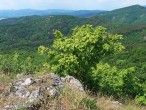
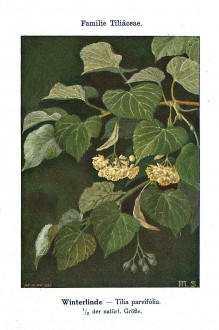
Species: Tilia cordata Mill., Genus: Tilia, Family: Tiliaceae, Group: Angiosperms

(Tilia cordata Mill.)
-> Genus: Tilia -> Family: Tiliaceae -> Group: Angiosperms

Habitus

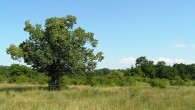
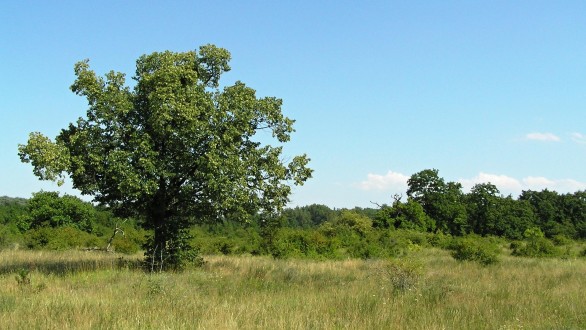
  • it is a tree 20 - 30 m high,  crown is broadly ovate, spreading to ellipsoidal, densely capped
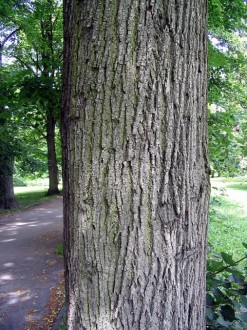
  • bark is light brown, later brownish-grey
  • bork is shallowly fissured into longitudinal strips, dark grey to blackish

Buds

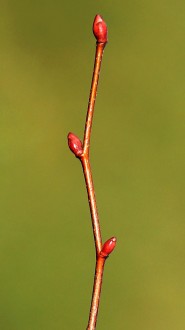
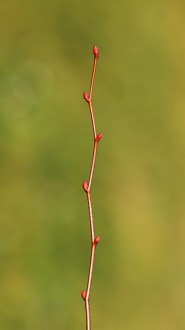
  • bud arrangement is spiral - alternate
  • buds are ovoid, obtuse, sessile
  • covering scales are two, yellow-green to reddish-brown
  • lower scale is smaller - only laterally pressed to the large hood-like scale

Shoots

  • shoots are round, broken at the point of budding, yellow-brown to reddish-brown
  • lenticels are dark, round

Leaves (assimilation organs)

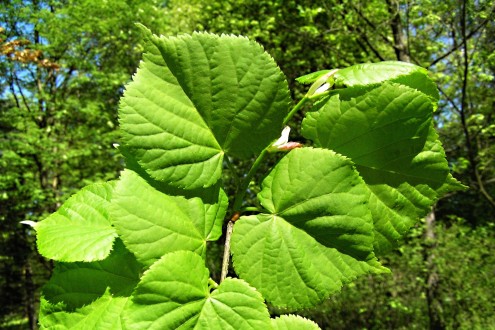
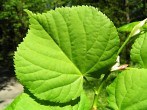
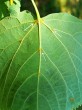
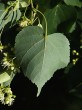
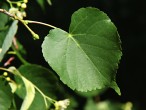
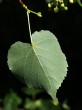
  • the leaves are simple,  broadly cordate, 5 - 8 x 4 - 7 cm large
  • at the top they are long pointed,  at the base irregularly cordate, along the margin doubly serrate, or serrated-toothed
  • the upper side is dark green glabrous,  the lower side is blue-green
  • the venation of the third order is indistinct
  • in the vein axils there are tufts of "rusty" hairs
  • the petiole is glabrous. 2 - 4 cm long

Flowers

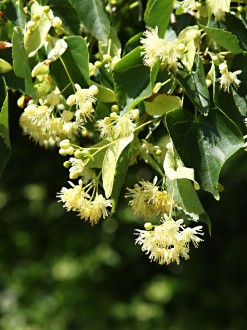
  • it is a monoecious tree with bisexual flowers, flowers are yellow-green, grouped 5 - 9 in upright clusters on long stalks, to which a 4 - 8 cm long tongue-shaped yellow-green bract is attached
  • it flowers in VI - VII after leafing out, about 14 days later than large-leaved linden (Tilia platyphyllos)

Fruits – seeds

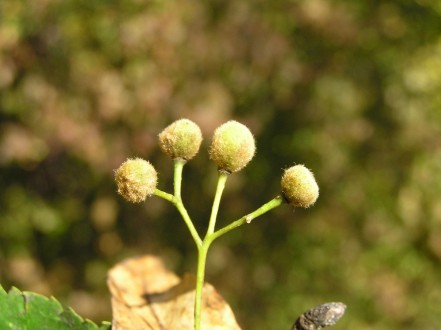
  • the fruit is a single-seeded achene (nut), obovate, 5 - 7 mm large, ± smooth
  • the pericarp is leathery (soft - can be squeezed), densely tomentose
  • it ripens in September
  • germination is 50 - 70% and retains it for 2 - 3 years
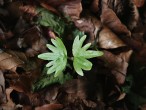
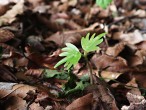
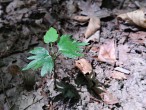
  • seedling of the small-leaved linden:
    • cotyledons palmately 5 or more lobed
    • the first leaves are ovate, pointed, unevenly serrated at the base, obliquely heart-shaped, similar in shape to the first leaves of the Mountain Maple, but hairy and not opposite

Extension

  • it is originally widespread in a large part of Europe and reaches as far as Siberia
  • in Slovakia it grows from the lowest altitudes and on average it rises to 870 m above the sea level (max. 1,130 m above the sea level)
  • it is common on plains and at the foot of slopes
  • its presence increases from west to east in Slovakia

Ecology

  • it is a shade to semi-shaded tree, tolerates strong shading when young
  • it grows mainly on deep, but also shallow soils, scree with maples (Acer), elms (Ulmus) and ash (Fraxinus) in floodplain forests with pedunculate oak (Quercus robur)
  • it grows well on deep, fresh soils rich in nitrogen
  • it belongs to the so-called valuable broadleaf trees
  • the root system is rich, heart-shaped

Significance

  • it is the national tree of the Slavs
  • it is a valuable canopy tree and a land reclamation tree that protects and improves the soil with its fallow
  • it is honey-bearing
  • the wood is of high quality, used mainly in carving
  • it is common as an alley tree
  • it has good stump regeneration

From history

Support atlasdrevin.sk

Súbory cookies:

S cieľom zabezpečiť riadne fungovanie tejto webovej lokality ukladáme niekedy na vašom zariadení malé dátové súbory, tzv. cookie.
Ak povolíte všetky cookies a navštívite nás nabudúce, pripojíte sa vďaka ním rýchlejšie, a náš web vám ponúkne relevantné informácie a umožní vám počas objednávky jednoduchšie vyplniť vaše údaje. Súbory cookies používame najmä na anonymnú analýzu návštevnosti a vylepšovania našich stránok. Ak sa rozhodnete neakceptovať cookies, nebudete môcť používať niektoré funkcie na našej webovej stránke.

Akceptovať všetky cookies