Species: Frangula alnus Mill., Genus: Frangula, Family: Rhamnaceae, Group: Angiosperms

(Frangula alnus Mill.)
-> Genus: Frangula -> Family: Rhamnaceae -> Group: Angiosperms

Habitus

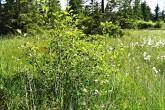
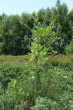
  • it is a shrub up to 5 - 6 m, crown irregular, sparsely branched
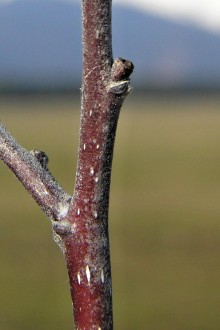
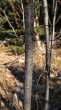
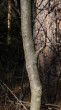
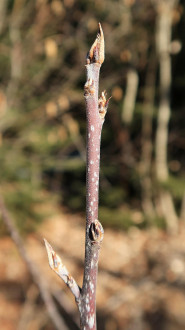
  • bark is purplish-grey with numerous convex whitish lenticels
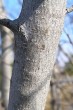
  • bork is dark grey, only shallowly longitudinally fissured

Buds

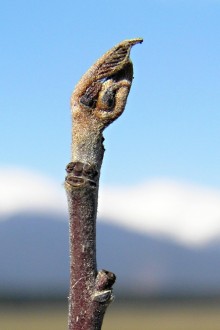
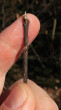
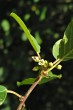
  • buds are spirally arranged, ovate-acuminate, sessile, naked (without integumentary scales), densely rusty-hairy, 3 - 6 mm in size

Shoots

  • shoots are purple-brown, young rusty-hairy, later glabrous
  • lenticels are linear, whitish

Leaves (assimilation organs)

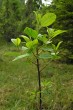
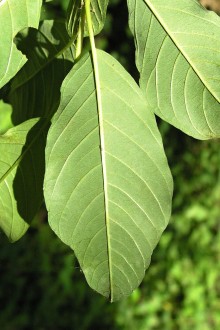
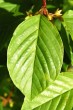
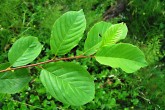
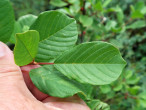
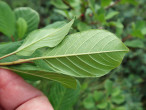
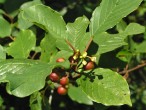
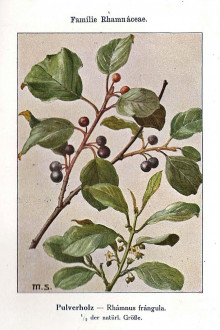
  • the leaves are simple, obovate to broadly elliptic, 3 - 7 x 2 - 4 cm large
  • they are shortly acuminate, entire margin with 7 - 10 pairs of second-order veins
  • the upper side is dark green, matte
  • the lower side is lighter, rusty hairy on the veins
  • the petiole is 15 - 20 mm long

Flowers

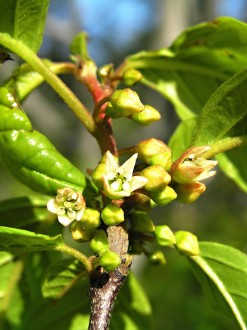
  • the tree is monoecious, the flowers are bisexual, five-petaled, whitish with a pinkish margin
  • they bloom from May to August !
  • they are grouped in small clusters of 2 - 10 in the leaf axils

Fruits – seeds

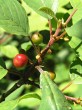
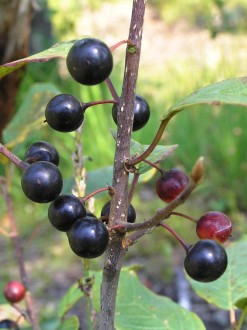
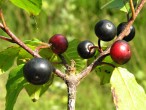
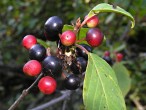
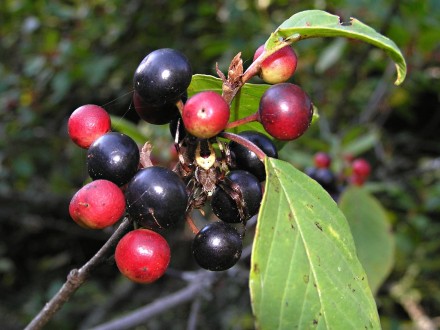
  • the fruit is a 5 - 8 mm large spherical drupe, dark purple to blackish when ripe, shiny
  • it contains 1 - 3 seeds
  • it ripens continuously in VIII – X

Extension

  • it is originally widespread throughout Europe to Siberia
  • in Slovakia it occurs almost throughout the entire territory, from the lowest positions to approximately 800 (1,030) m above the sea level
  • most often it grows in alder forests in sites with fluctuating groundwater levels
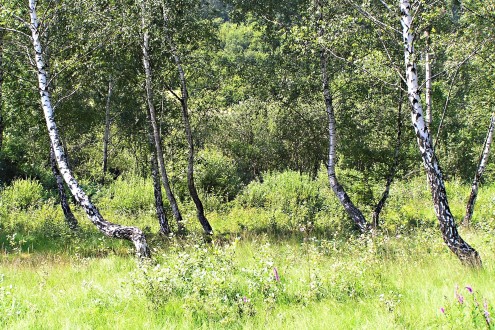
  • it is common in pine and birch groves on acidic substrates
  • it also grows on peat bogs (Rojkov peat bog)

Ecology

  • it is a partially shaded tree, it tolerates stagnant groundwater and extreme temperature fluctuations

Significance

  • it stands out for its considerable root and stump regeneration
  • in some places it spontaneously occupies logging areas, making it an "unpleasant woody weed"
  • the bark is used to produce dyes and medicines and also as an effective laxative (but the bark must not be used fresh)
  • the fruits have a similar effect to the bark, but 12 times stronger!

From history

Support atlasdrevin.sk

Súbory cookies:

S cieľom zabezpečiť riadne fungovanie tejto webovej lokality ukladáme niekedy na vašom zariadení malé dátové súbory, tzv. cookie.
Ak povolíte všetky cookies a navštívite nás nabudúce, pripojíte sa vďaka ním rýchlejšie, a náš web vám ponúkne relevantné informácie a umožní vám počas objednávky jednoduchšie vyplniť vaše údaje. Súbory cookies používame najmä na anonymnú analýzu návštevnosti a vylepšovania našich stránok. Ak sa rozhodnete neakceptovať cookies, nebudete môcť používať niektoré funkcie na našej webovej stránke.

Akceptovať všetky cookies