Species: Rhamnus catharticus L., Genus: Rhamnus, Family: Rhamnaceae, Group: Angiosperms

(Rhamnus catharticus L.)
-> Genus: Rhamnus -> Family: Rhamnaceae -> Group: Angiosperms

Habitus

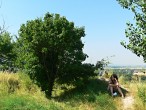
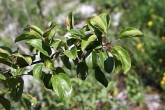
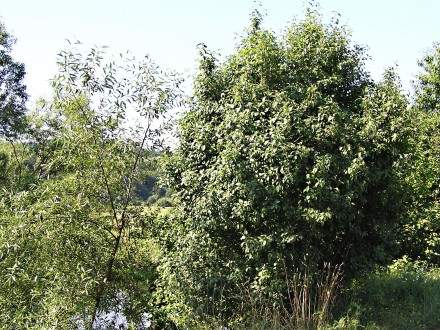
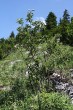
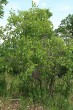
  • most often as a shrub or a lower tree 6 - 7 m tall
  • crown is spherical to irregular
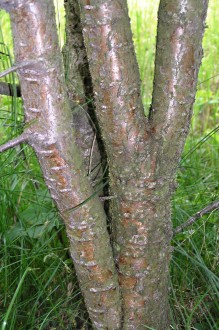
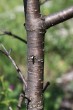
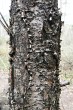
  • bark is dark grey to blackish
  • later, dark grey to blackish, relatively thin bark is formed, which peels off in twisted scales (resembles the bark of bird cherry)

Buds

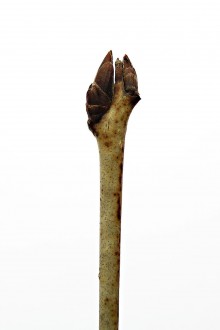
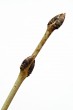
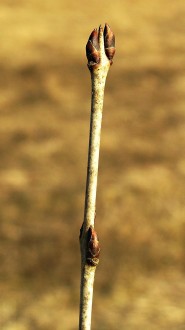
  • buds are arranged obliquely (in two rows) opposite (often spirally shaped)
  • ovate-pointed, pressed to the twig
  • covering scales are dark purple to blackish
  • at the end of the shoot there are usually two buds with a thorn between them

Shoots

  • shoots are relatively thin, at first purple-brown, later light grey
  • at the end they usually end with a thorn of stem origin
  • on older branches there are numerous brachyblasts

Leaves (assimilation organs)

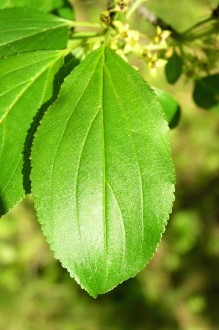
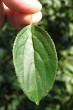
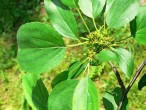
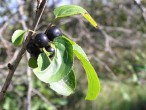
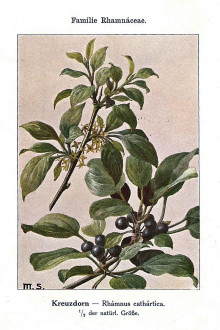
  • the leaves are simple, entire, broadly ovate to elliptical, 5 - 8 x 2.5 - 4 cm large
  • they are shortly pointed at the end, slightly serrated along the margin
  • they contain 2 - 4 pairs of second-order apical veins
  • stalk is 1 - 3 cm long

Flowers

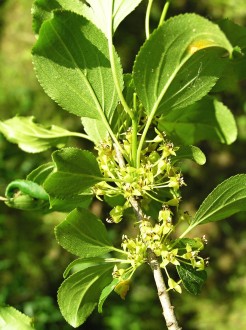
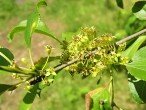
  • flowers are unisexual, small, greenish
  • flowering in May – June
  • they grow in dense clusters in the leaf axils at the base of this year's branches

Fruits – seeds

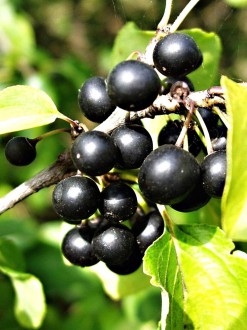
  • the fruit is a black-purple, round, 6 - 10 mm drupe
  • the flesh is green to purple
  • it contains four ovoid seeds 6 x 3 mm in size
  • it ripens in IX – X

Extension

  • almost in all of Europe
  • in Slovakia from the lowest elevations to 750 m above the sea level
  • it grows mainly in open dry habitats, but also on river banks and river terraces (also in floodplain forests)

Ecology

  • it is a semi-shade to light-loving woody plant, frost-resistant, undemanding to nutrients

Significance

  • it is cultivated only rarely
  • the fruits were used in folk medicine as a mild laxative and also as a coloring agent - the juice of the fruits after adding alum (a double salt of sulfuric acid) provides a deep green dye

From history

Support atlasdrevin.sk

Súbory cookies:

S cieľom zabezpečiť riadne fungovanie tejto webovej lokality ukladáme niekedy na vašom zariadení malé dátové súbory, tzv. cookie.
Ak povolíte všetky cookies a navštívite nás nabudúce, pripojíte sa vďaka ním rýchlejšie, a náš web vám ponúkne relevantné informácie a umožní vám počas objednávky jednoduchšie vyplniť vaše údaje. Súbory cookies používame najmä na anonymnú analýzu návštevnosti a vylepšovania našich stránok. Ak sa rozhodnete neakceptovať cookies, nebudete môcť používať niektoré funkcie na našej webovej stránke.

Akceptovať všetky cookies