Species: Aesculus hippocastanum L., Genus: Aesculus, Family: Sapindaceae, Group: Angiosperms

(Aesculus hippocastanum L.)
-> Genus: Aesculus -> Family: Sapindaceae -> Group: Angiosperms

Habitus

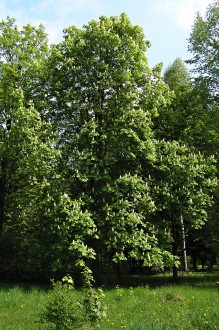
  • it is a tree growing to a height of 20 – 25 m
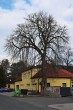
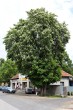
  • crown is broadly ovoid to spherical, densely capped
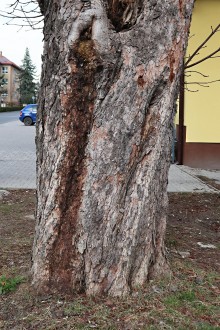
  • bark is grey-brown
  • bork is grey-brown to blackish, cracked into round or irregular plates

Buds

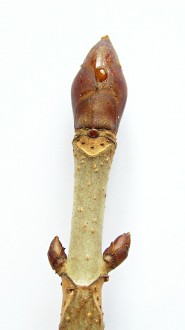
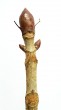
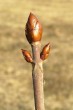
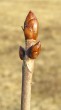
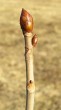
  • buds are opposite
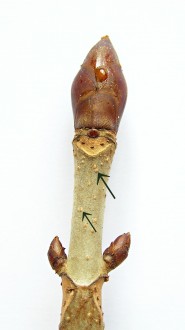
  • terminal one is large, broadly ovate, lateral are smaller
  • covering scales are reddish brown with a darker margin
  • buds are resinous, distinctly shiny, sticky !

Shoots

  • young ones are greenish, later dark brown to greyish
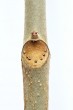
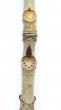
  • leaf scar is large, heart-shaped, with traces of vascular bundles around the circumference
  • lenticels are hemispherical, rusty brown

Leaves (assimilation organs)

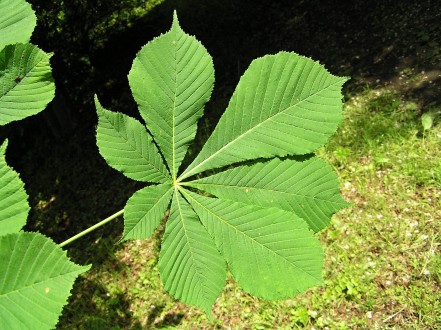
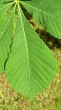
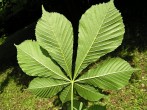
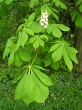
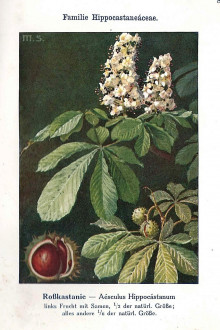
  • the leaves are palmately compound, seven-lobed (rarely five or nine-lobed), 15 - 25 cm long
  • the petiole is 15 - 25 cm long
  • individual leaves are elongated obovate, widest in the upper third, shortly sharply pointed at the end, double serrate along the margin

Flowers

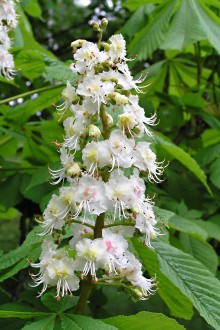
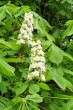
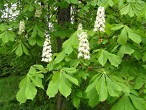
  • it is a monoecious tree, flowers  are bisexual, five-petaled, white, with yellow and reddish spots
  • they grow at the end of this year's shoots in upright spreading panicles
  • it blooms in May

Fruits – seeds

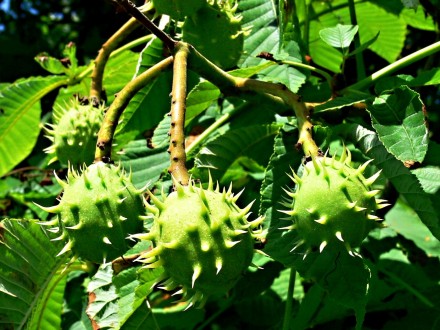
  • the fruit is a broadly ovoid to spherical, spiny, fleshy capsule, initially green, later brown
  • the capsule splits with three valves, contains 1 - 3 reddish-brown seeds (chestnuts) 3 - 4 cm large

Extension

  • the original area of ​​occurrence was not known for a long time (it spread to Europe from Turkey)
  • it was originally widespread on the Balkan Peninsula (Northern Greece, Albania) in mountain forests
  • in Slovakia, mainly in parks, gardens, but also in the open countryside (game reserves)
  • in Slovakia, it occurs only as a cultivated species

Ecology

  • it is a  semi-shaded woody plant, demanding on moisture and nutrients in the soil
  • it is frost-resistant, sensitive to exhalations

Significance

  • it is a decorative park woody plant, mainly at the time of flowering (many forms are also known)
  • it is fruit-bearing – suitable for game reserves
  • it is used in the pharmaceutical industry

From history

Support atlasdrevin.sk

Súbory cookies:

S cieľom zabezpečiť riadne fungovanie tejto webovej lokality ukladáme niekedy na vašom zariadení malé dátové súbory, tzv. cookie.
Ak povolíte všetky cookies a navštívite nás nabudúce, pripojíte sa vďaka ním rýchlejšie, a náš web vám ponúkne relevantné informácie a umožní vám počas objednávky jednoduchšie vyplniť vaše údaje. Súbory cookies používame najmä na anonymnú analýzu návštevnosti a vylepšovania našich stránok. Ak sa rozhodnete neakceptovať cookies, nebudete môcť používať niektoré funkcie na našej webovej stránke.

Akceptovať všetky cookies